With the majority of first quarter call reports now filed, early results show credit unions are entering 2026 from a position of strength. Capital levels remain solid, liquidity is strong and earnings are resilient, even as growth patterns continue to reflect a familiar seasonal dynamic.
Balance sheet trends
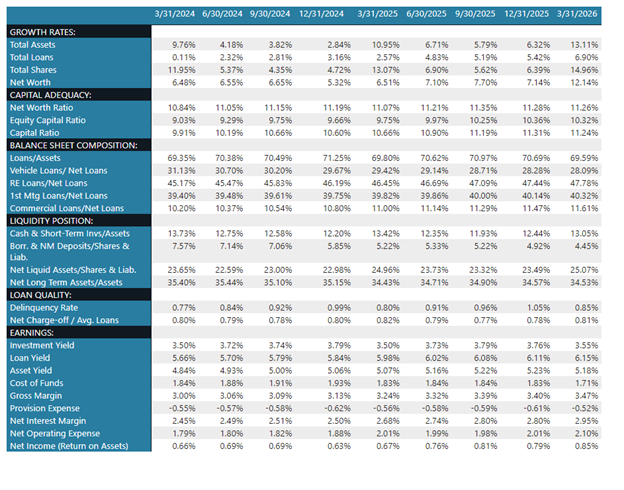
Balance sheet growth accelerated in the first quarter, driven primarily by strong deposit inflows.
- Total assets increased 13.1% (annualized)
- Shares grew 15.0%
- Loans expanded by 6.9%.
As expected, deposit growth outpaced loan demand early in the year.This dynamic was amplified by seasonal tax refunds. Larger than normal refunds in 2026 boosted deposits more than usual, with increased funds being credited directly to member accounts early in the quarter.
Loan growth strengthened modestly during the quarter but remained measured relative to deposits. Growth continued to lean toward commercial lending and residential real estate, while consumer loan categories, particularly auto loans, remained more subdued.
Capital levels improved alongside balance sheet growth. Net worth increased 12.1% (annualized), leaving the industry with a healthy net worth ratio of 11.26% at quarter end.
Liquidity remains strong
Liquidity conditions remained strong entering 2026.
- Cash and short term investments represented 13.1% of total assets, reflecting continued excess liquidity generated by deposit inflows.
- Borrowings and non member deposits remained limited at 4.5% of shares and liabilities, reinforcing the industry’s conservative funding profile.
While elevated liquidity can create some pressure on earnings over time, it also provides meaningful flexibility. Credit unions are well positioned to respond quickly as loan demand evolves, pricing opportunities emerge, or interest rate expectations shift later in the year.
Credit quality holding steady
Credit performance remained stable in the first quarter.
- Delinquency: 0.85% (slightly improved from year-end)
- Net charge offs: 0.81% of average loans
While delinquency remains above pre-2023 levels, overall trends suggest normalization rather than broad based deterioration. Some borrowers continue to face financial pressure, but loss severity has not materially worsened.
Performance continues to vary across portfolios and member segments, which will be important to monitor throughout the year.
Earnings performance
Earnings remained resilient as the year began.
- Return on assets (ROA) improved to 0.85%
- Loan yields increased to 6.15%
- Asset yields rose to 5.18%
- Cost of funds declined further to 1.71%
These dynamics supported a gross margin of 3.47% and a net interest margin of 2.95%.
Provision expense declined modestly, while net operating expenses increased slightly. Overall, stable margins and improving funding costs helped sustain earnings performance.
Looking ahead
Credit unions are entering 2026 balancing several familiar priorities:
- Deploying excess liquidity effectively
- Managing loan growth in a competitive environment
- Preparing for potential interest rate adjustments
Strong seasonal deposit inflows, amplified this quarter by larger tax refunds, have strengthened near term liquidity. As the year progresses, converting that liquidity into earnings-generating assets will be a key focus.
With strong capital, ample liquidity and stable earnings, the industry is well positioned to navigate these dynamics.
Turn insight into action
Catalyst’s ALM experts are working closely with credit unions to translate industry trends into actionable balance sheet strategies, helping teams test assumptions, manage risk and align decisions with their long term objectives.
Contact our ALM team to turn today’s insight into tomorrow’s strategy.
Industry trends
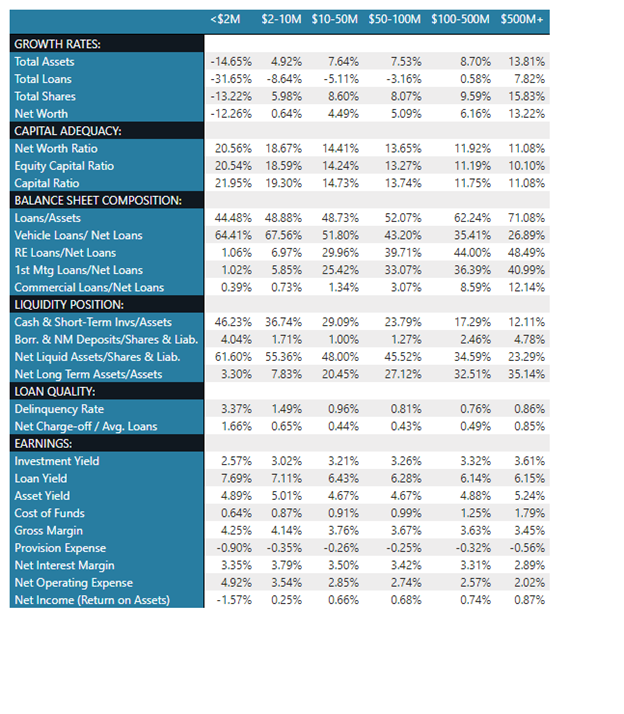
Trends by asset size